Robots Building Data Centers: SoftBank and the Cost of AI Infrastructure
Published on 4/30/2026
•
Engineering
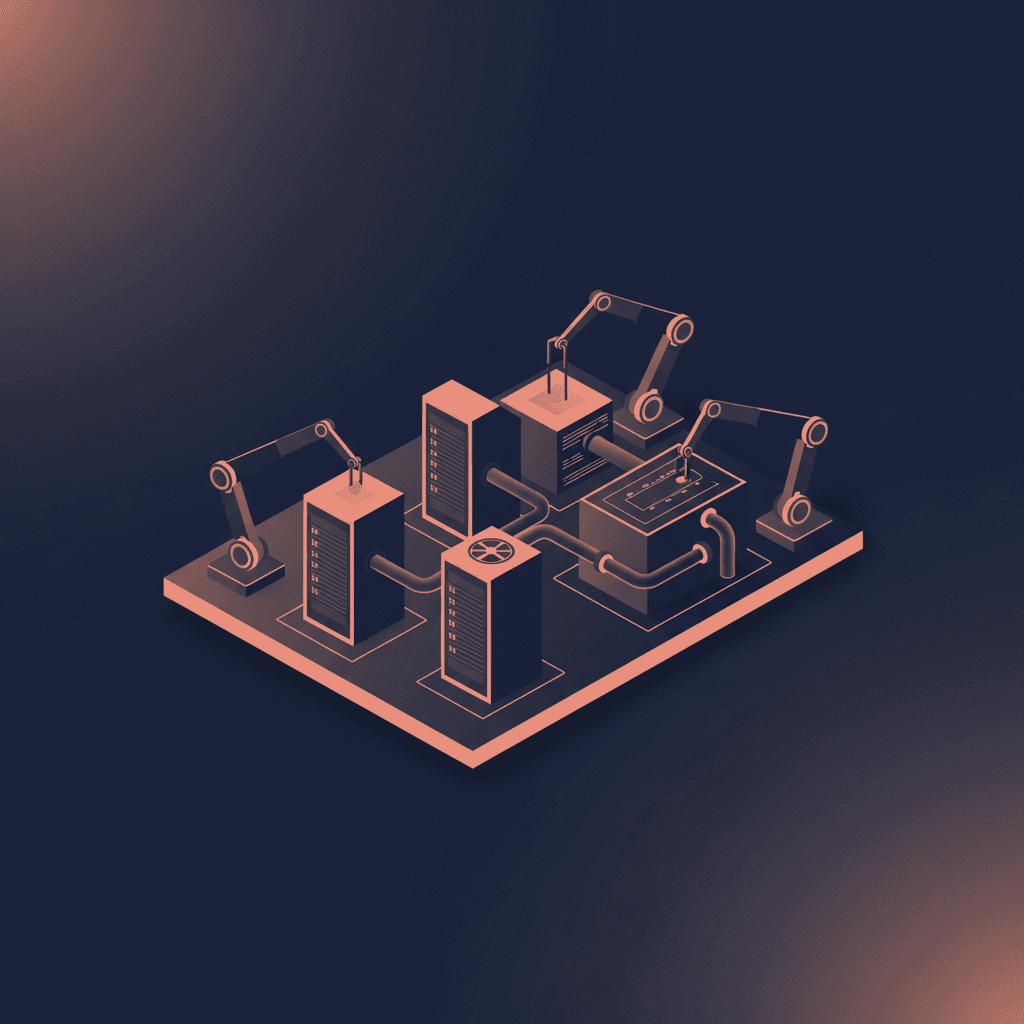
If you think building a data center is just concrete, racks, and air conditioners, you're not alone. But when SoftBank creates a separate robotics company to build data centers and is already eyeing a $100 billion IPO, it's worth considering: construction is turning into a high-tech assembly line where robots are not just helpers but a necessity.
According to TechCrunch, SoftBank is launching a division that will use AI and robots to build data centers. The idea isn't new — construction automation has been discussed for a while — but the scale is impressive: a $100 billion pre-IPO valuation is comparable to the market cap of the world's largest construction companies. Clearly, SoftBank sees capacity shortages as the main bottleneck for AI infrastructure and is betting that traditional construction methods won't cut it.
Construction as the Bottleneck for AI
Demand for compute power is growing faster than it can be built. In our experience, the timeline for a large data center from design to commissioning is 2–3 years. For an AI startup burning $10 million a month on GPU rental, every quarter of delay means lost market share or even bankruptcy. Robotizing construction could shorten the cycle to 12–18 months. That's what SoftBank is betting on.
Robots vs. Humans: Trade-offs
It's important not to get carried away here. Robotizing construction isn't about replacing humans — it's about synchronization. From our experience integrating AI systems into industry, the key gain isn't the speed of a single machine but eliminating downtime between stages. Robots can work 24/7 without breaks, but their maintenance, calibration, and adaptation to a specific site require skilled engineers. SoftBank will likely build not fully unmanned construction sites but hybrid chains: robots lay bricks and pull cables, while humans control quality and handle exceptions.
What This Means for Engineers and Clients
For those designing data centers, the advent of robotic construction introduces new constraints. Previously, layout was dictated by human ergonomics (aisles, ceiling height, lighting). Now you can optimize for robots: denser rack layouts, non-standard corridor shapes, automated cable routing. This could reduce cost per square meter by 15–20% — and these numbers are already being factored into business plans for large projects.
But there's a downside: robotization increases CapEx upfront. Buying and configuring construction robots costs millions of dollars, which only pay off at a scale of 50+ data centers. SoftBank, with its portfolio and ambitions, can afford that, but for the average colocation operator, such investments are still unjustified.
The IPO as a Maturity Indicator
The $100 billion IPO filing isn't just about raising capital. It's a signal to the market: SoftBank believes that robotic data center construction will become a standalone sector comparable in scale to cloud providers. If the IPO happens, we'll get a public company whose value directly depends on the speed of AI infrastructure deployment. For us, as a team working on AI products, this means the supply chain for compute power is becoming more industrial and predictable — and therefore our total cost of ownership estimates for clients will be more accurate.
Robots building data centers aren't science fiction — they're a logical step in the race for compute resources. The question isn't whether it will happen, but who gets there first.
Related articles
Starship V3: space construction where blueprints are written mid-flight
SpaceX launched Starship V3 — successfully, but without reaching orbit. We break down why the "fail fast" approach works in space and IT, and when it's better to draw first and build later.
5/24/2026
When Memory Costs More Than GPU: What Nvidia Doesn't Say in Vera Rubin Presentations
Memory in Nvidia's new AI systems has jumped 485% in cost, now making up 25% of rack price. We break down why GPU isn't the main expense and how to calculate TCO for AI infrastructure.
5/22/2026
VS Code Extension as Entry Point: 3800 Repositories Compromised
Leak of 3800 GitHub repos via malicious VS Code extension: why IDEs are a security weak spot and how to reduce risk without banning plugins.
5/21/2026